Overview
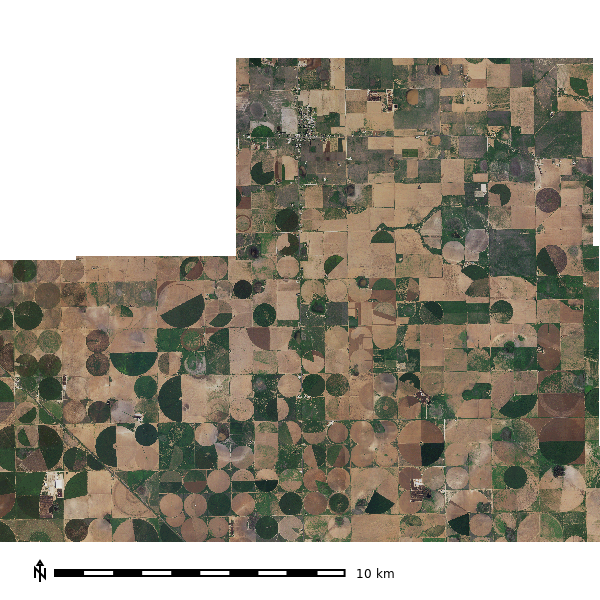
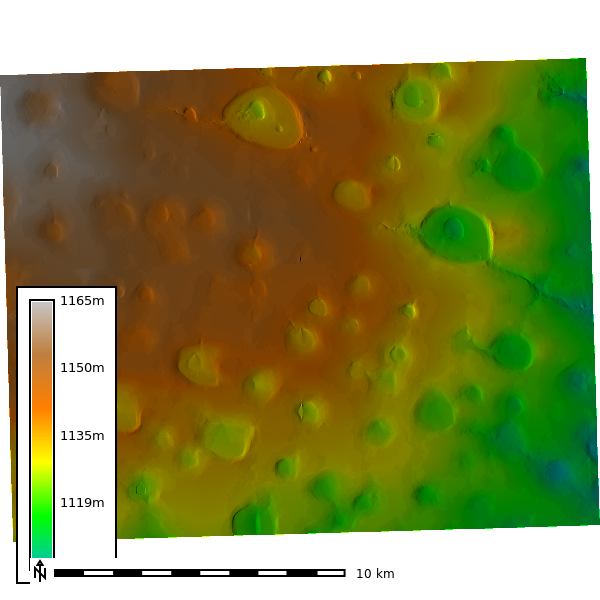
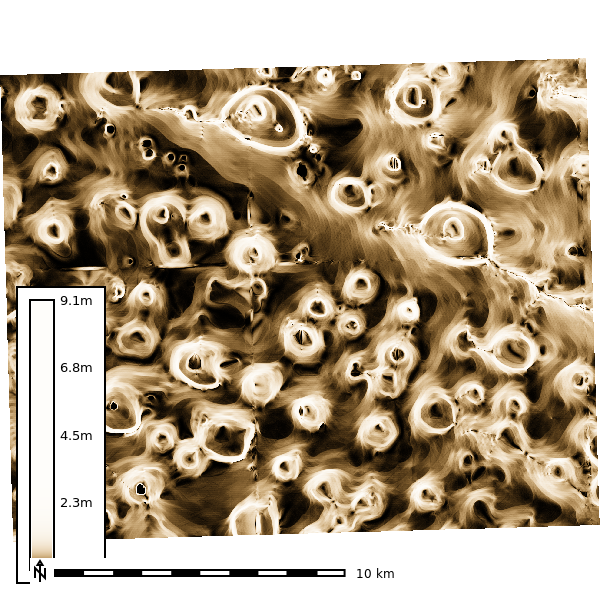
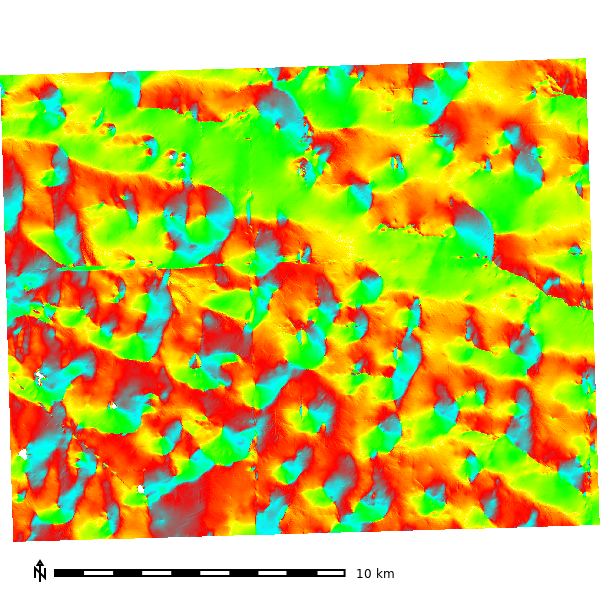
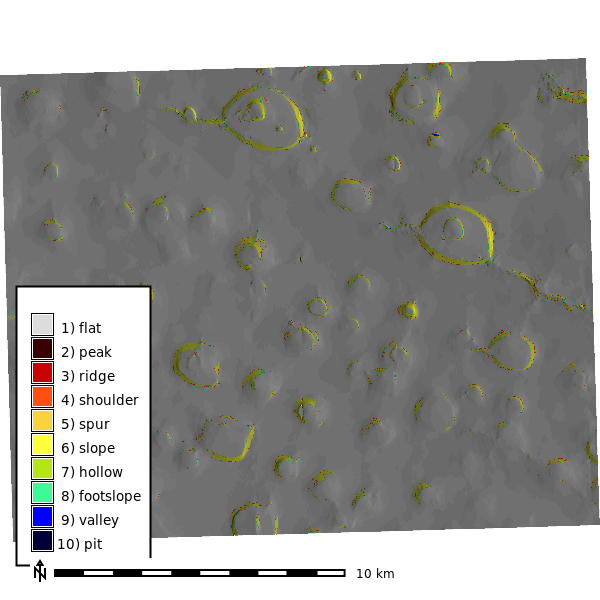
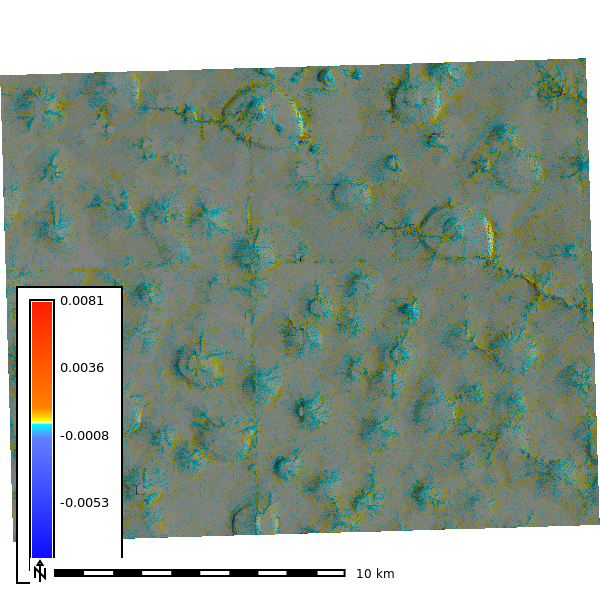
The TX069 playas site covers 324.74 km2 of the Texas High Plains, a landscape defined by what it lacks: integrated drainage. Runoff collects in thousands of shallow, internally drained playa depressions rather than flowing to streams. With 61.3 m of total relief spread across the largest study area in the ensemble (5.4 million cells at 8 m resolution) and an ARS of 0.07, this is the flattest site by a wide margin, the opposite end of the roughness ranking from Coweeta (5.5).
Playas are a hard case for overland flow models. Flow directions are weak, ponding dominates routing, and small elevation errors can reroute water between adjacent basins. However, they matter: playas are the primary recharge points for the Ogallala Aquifer, so getting their contributing areas right has direct consequences for water management on the High Plains.
What this site demonstrates:
- SIMWE behavior in depressional, internally drained terrain where ponding replaces channelized flow.
- Scalability: the largest cell count in the study by an order of magnitude.
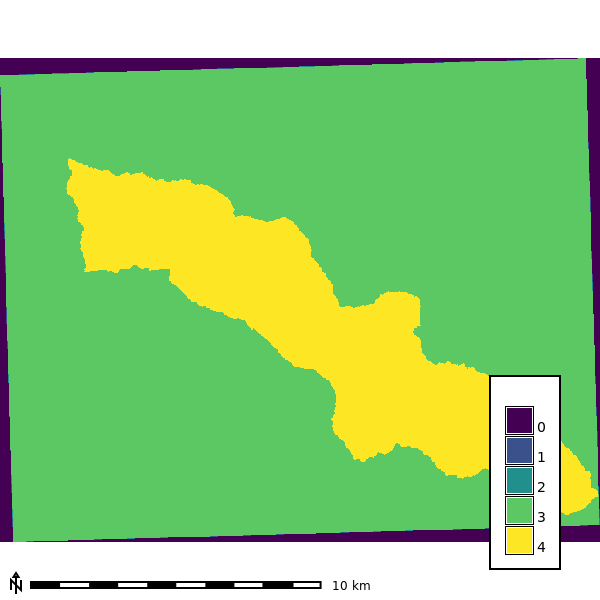
- How watershed delineation degrades with resolution when relief approaches the DEM error budget.
Site Details
| Location | Texas High Plains playas (soil survey area TX069), Texas |
| CRS | WGS 84 / UTM zone 13N (EPSG:32613) |
| DEM resolution | 8 m |
| NAIP year | 2022 |
| Area | 324.74 km2 (5,378,306 cells) |
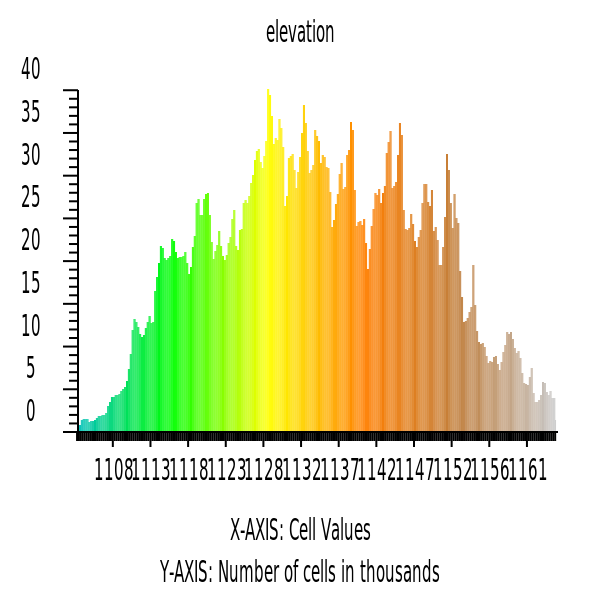
| Elevation | 1104.0 - 1165.3 m (mean 1134.9 m) |
| Average roughness (ARS) | 0.07 |
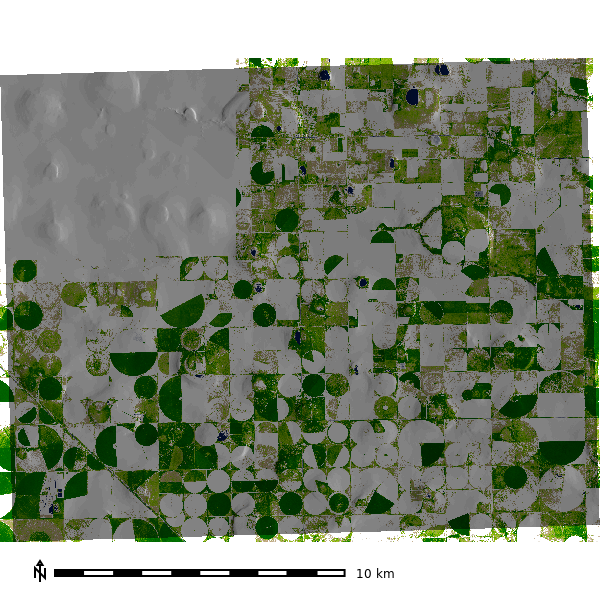
NAIP Imagery and Derived Products
Geomorphology
1st Order Derivatives
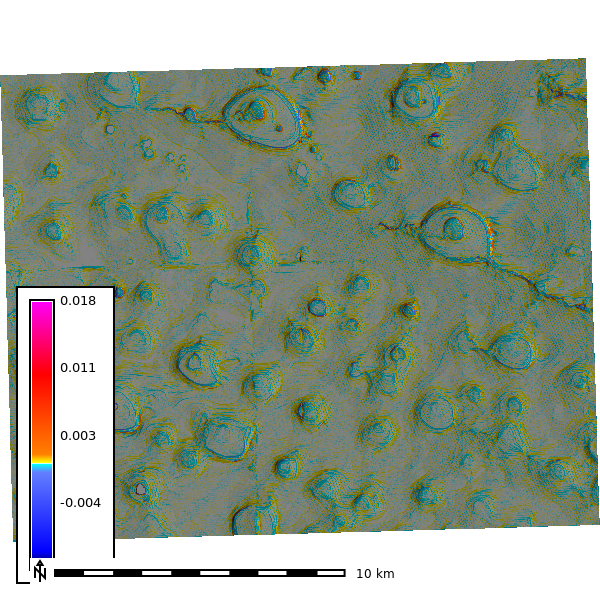
2nd order topographic derivatives
| Slope | Aspect | Geomorphon |
|---|---|---|
 |
 |
 |
| Profile Curvature | Planform Curvature |
|---|---|
 |
 |
Soils
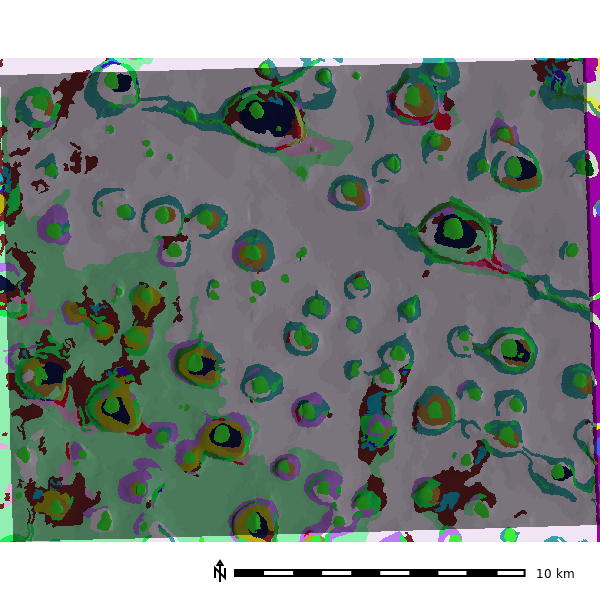
Soil survey polygons come from SSURGO, rasterized by map unit key (MUKEY). The MUKEY raster links every cell to its soil map unit properties (e.g., hydrologic soil group, saturated hydraulic conductivity), which drive the curve-number and infiltration inputs to the simulations below.
| SSURGO MUKEY |
|---|
 |
Simulations
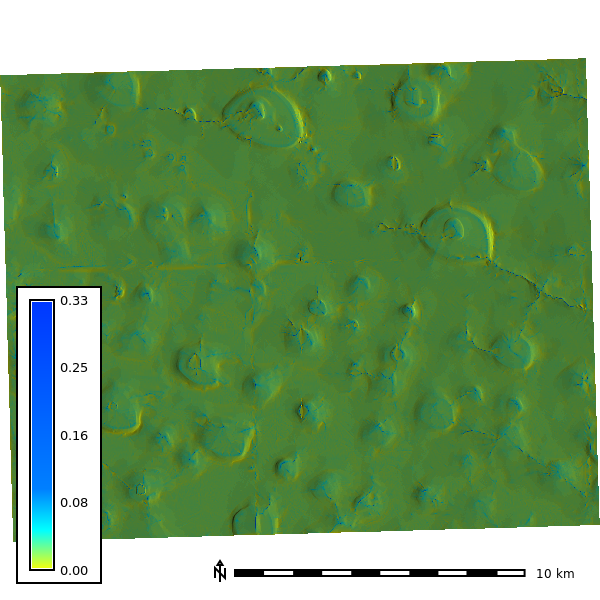
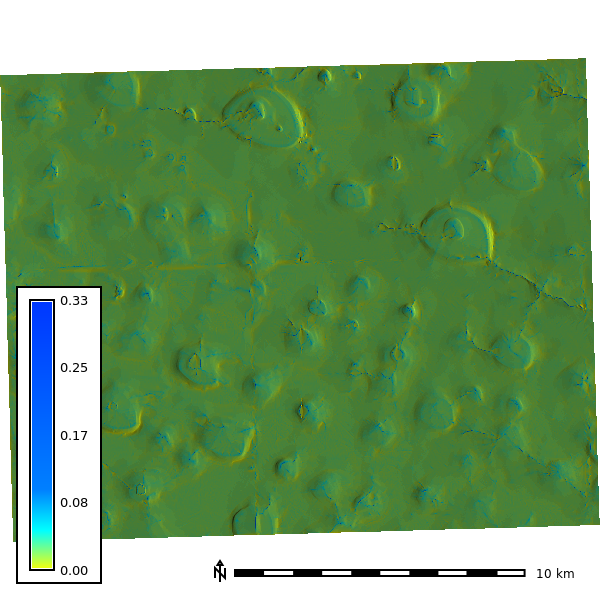
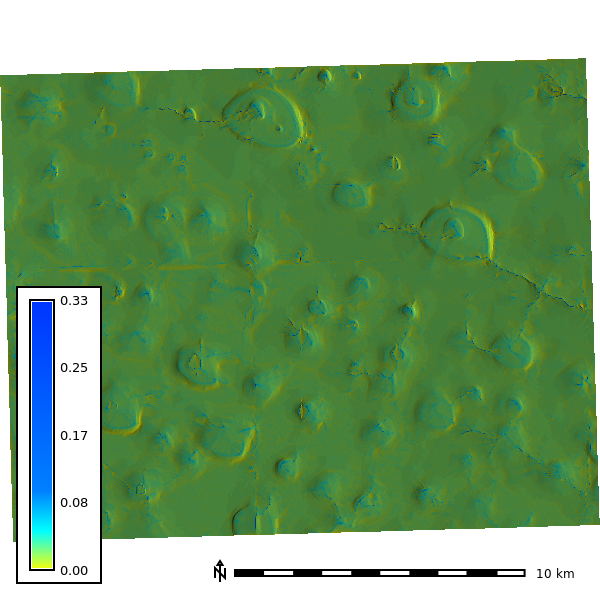
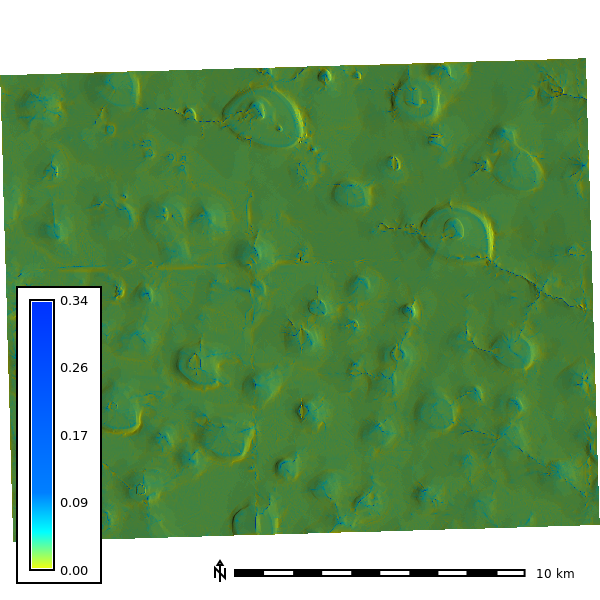
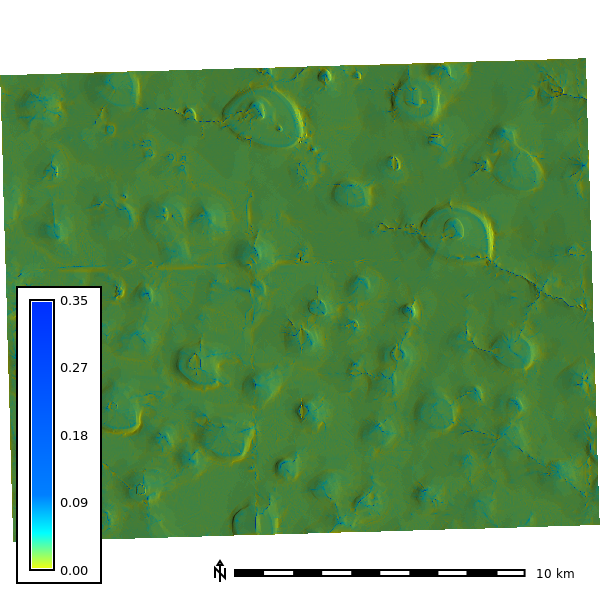
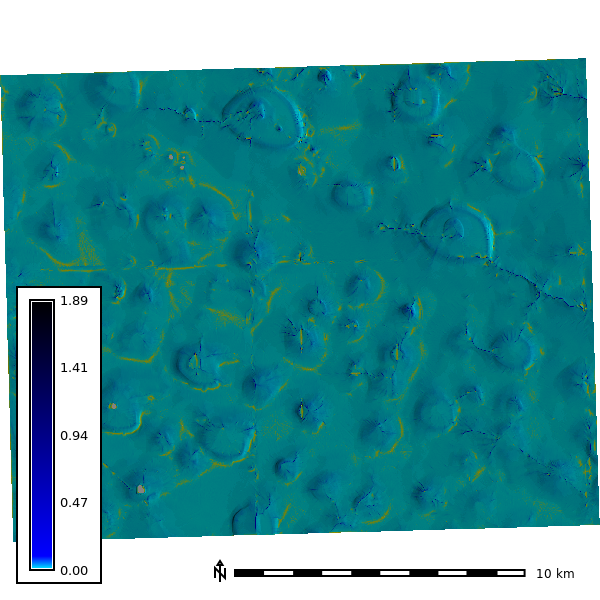
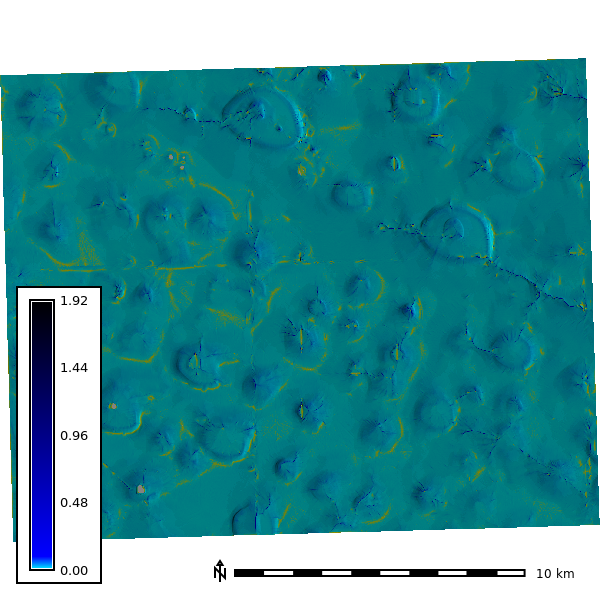
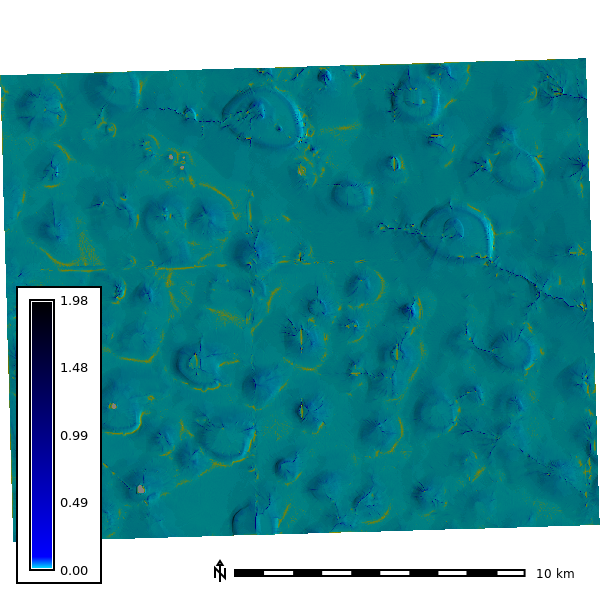
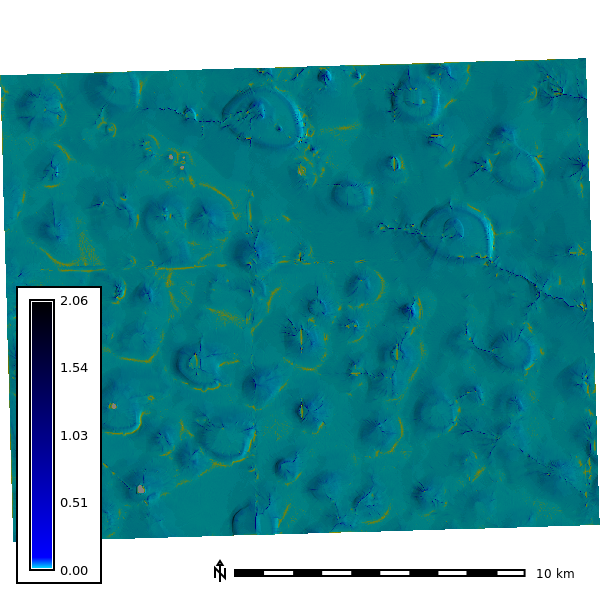
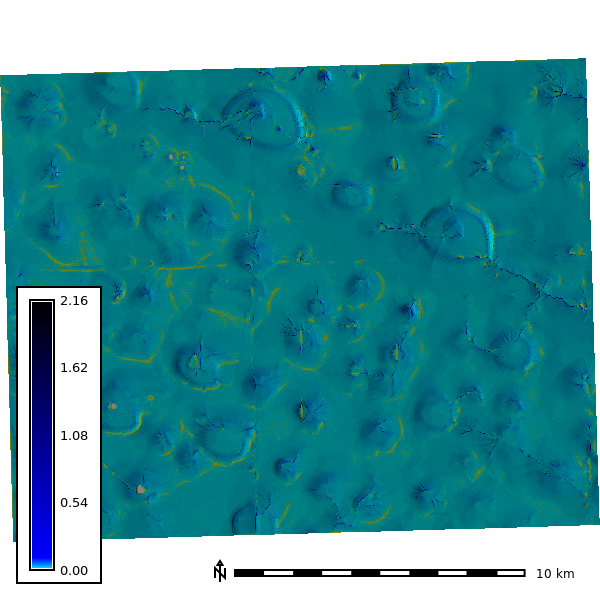
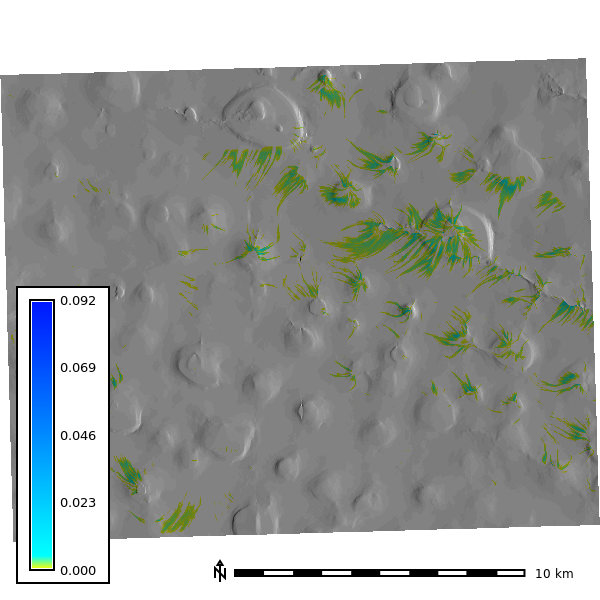
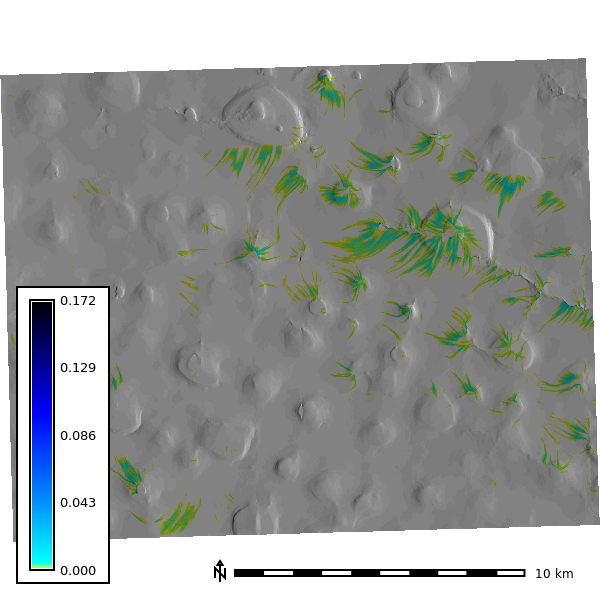
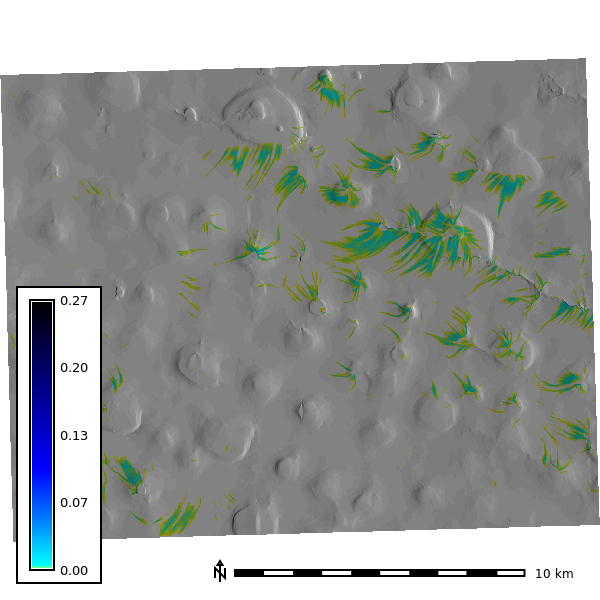
Overland flow is simulated with r.sim.water, the SIMWE path-sampling solution of the shallow-water flow equations. The default run applies a uniform 50 mm/hr rainfall with no infiltration and Manning’s n of 0.1, writing water depth (m) and unit discharge (m3/s) every 2 minutes over a 10-minute event. Spatial patterns therefore reflect terrain routing alone; the ground water and sensitivity sections below relax these assumptions.
Default Parameters
Depth
| 2 Min | 4 Min | 6 Min | 8 Min | 10 min |
|---|---|---|---|---|
 |
 |
 |
 |
 |
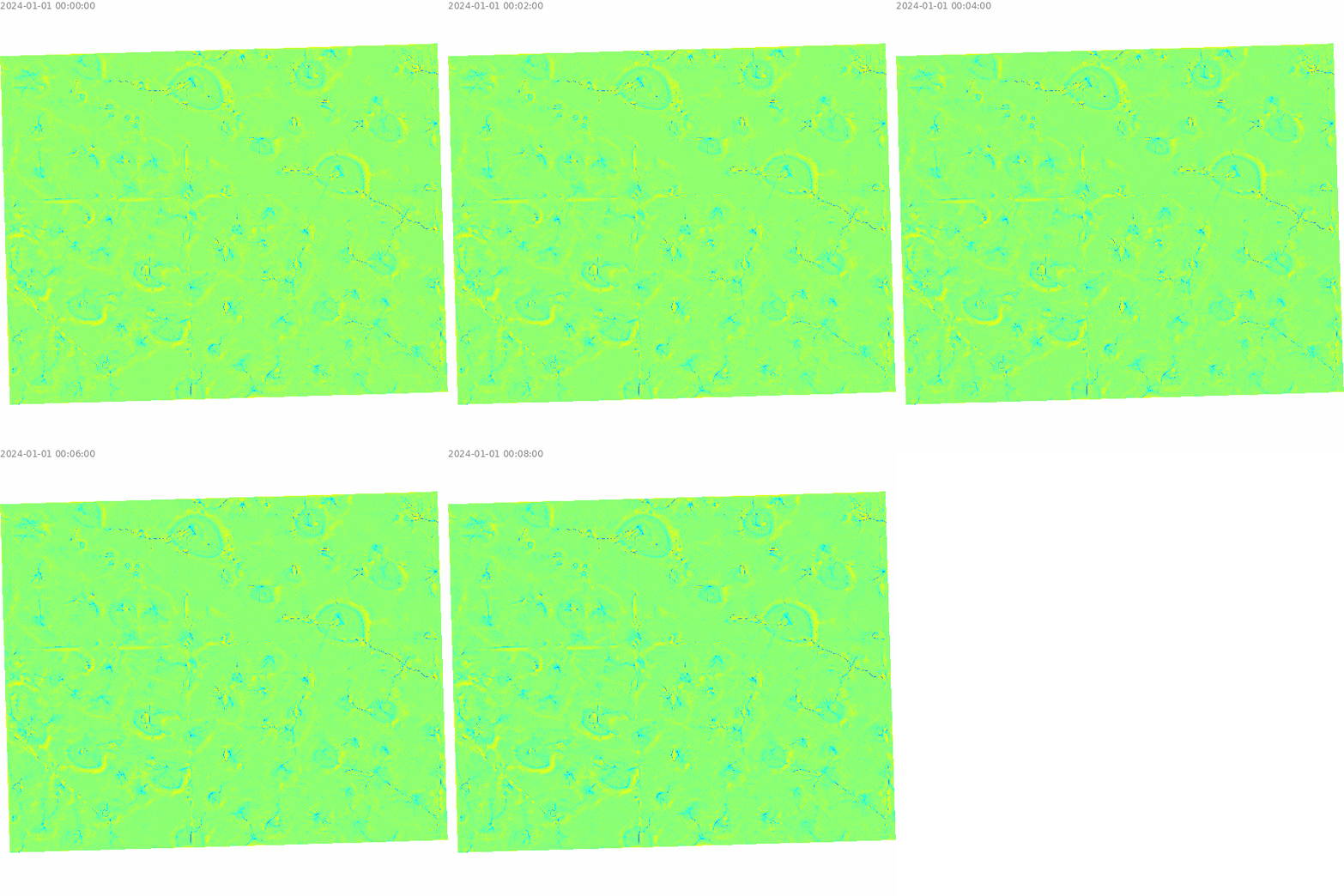
Discharge
| 2 Min | 4 Min | 6 Min | 8 Min | 10 Min |
|---|---|---|---|---|
 |
 |
 |
 |
 |
Ground Water
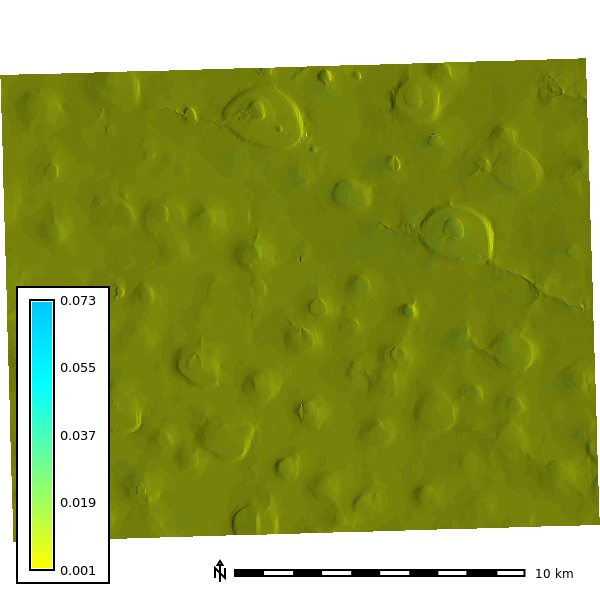
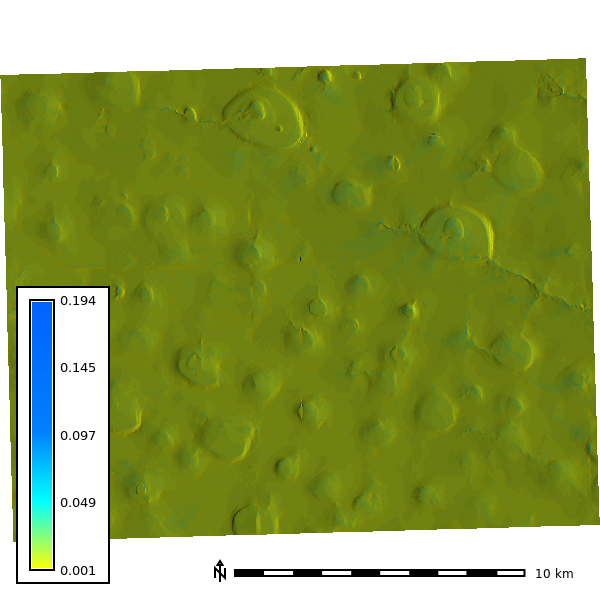
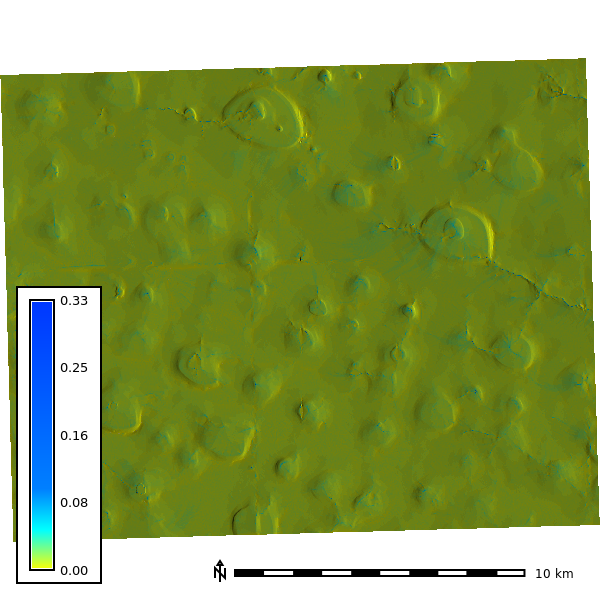
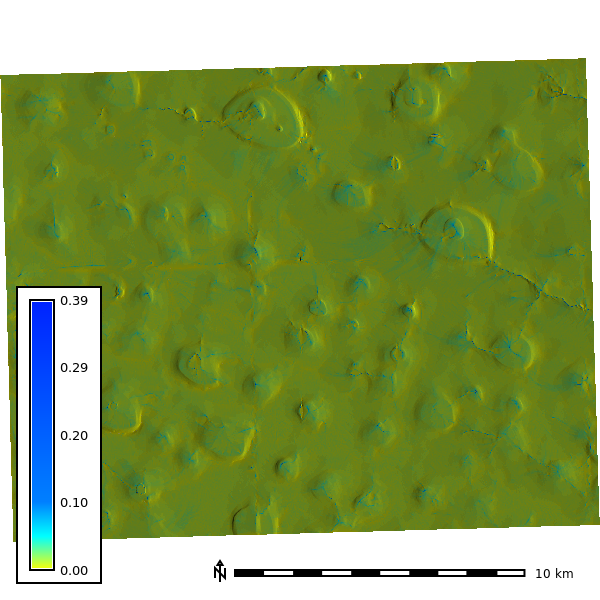
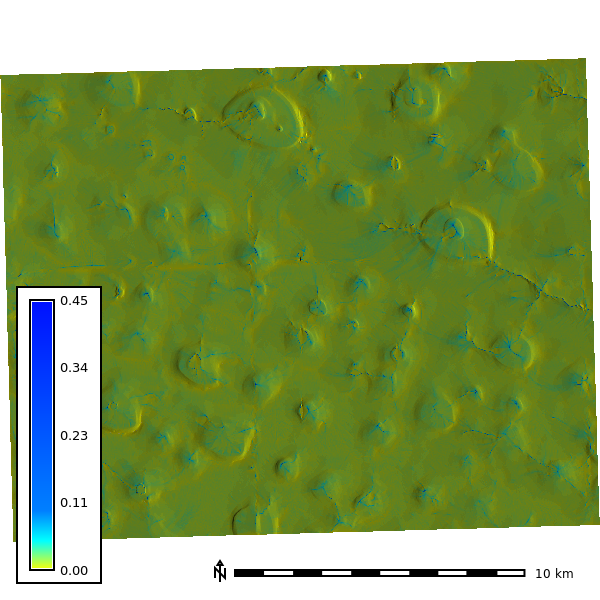
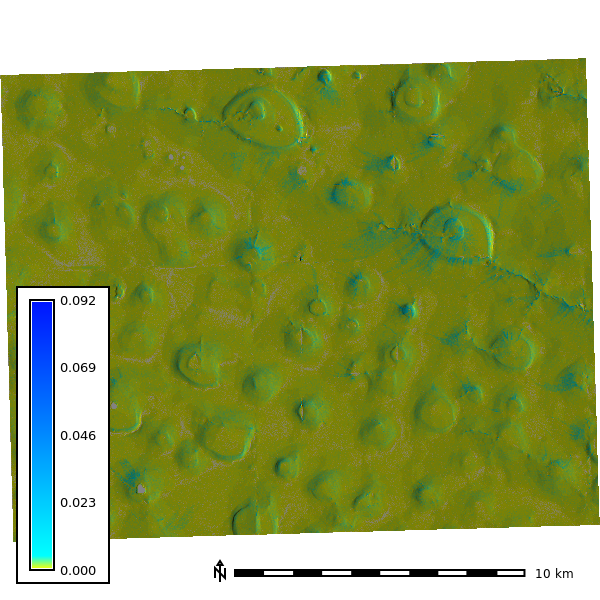
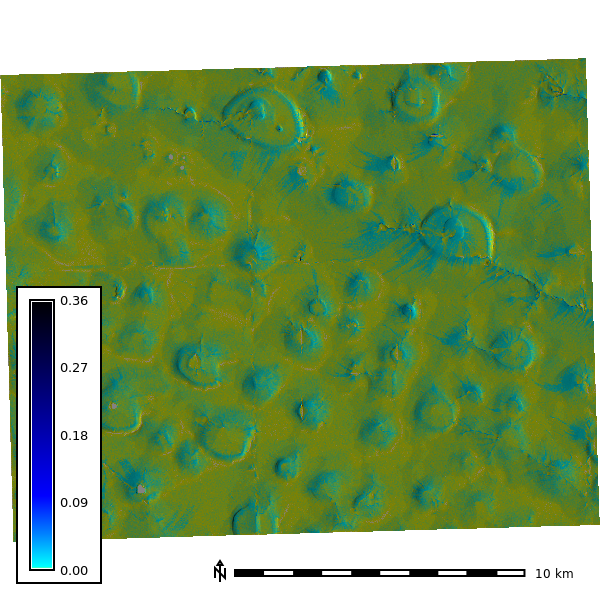
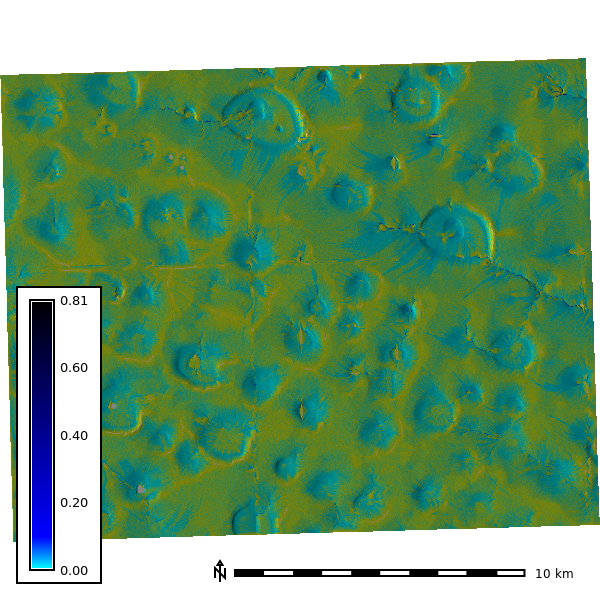
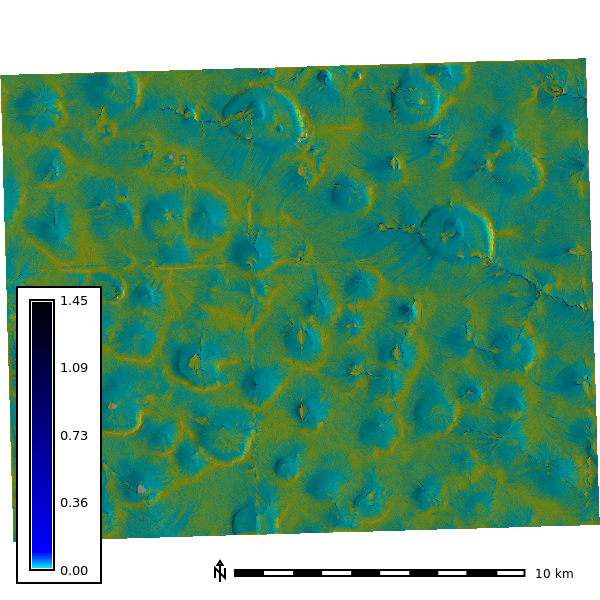
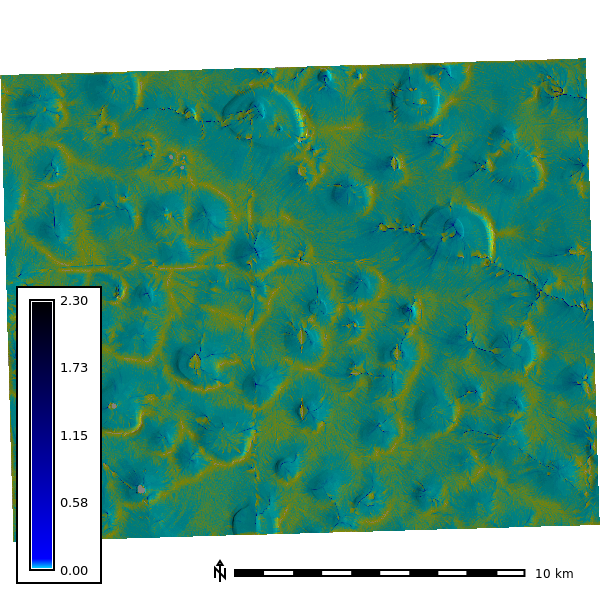
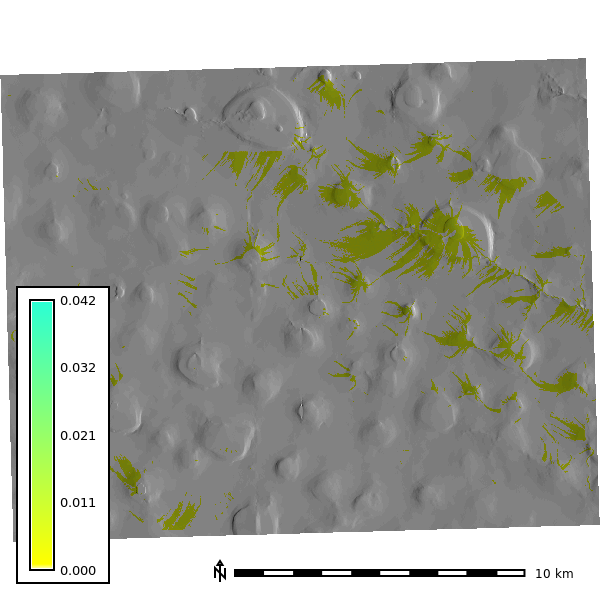
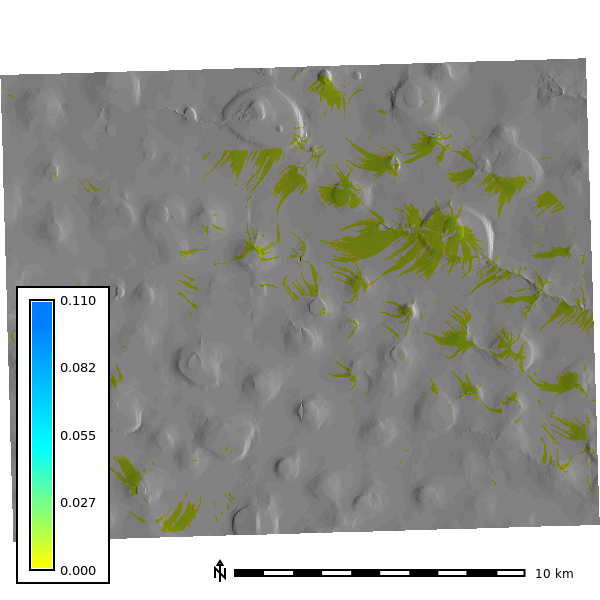
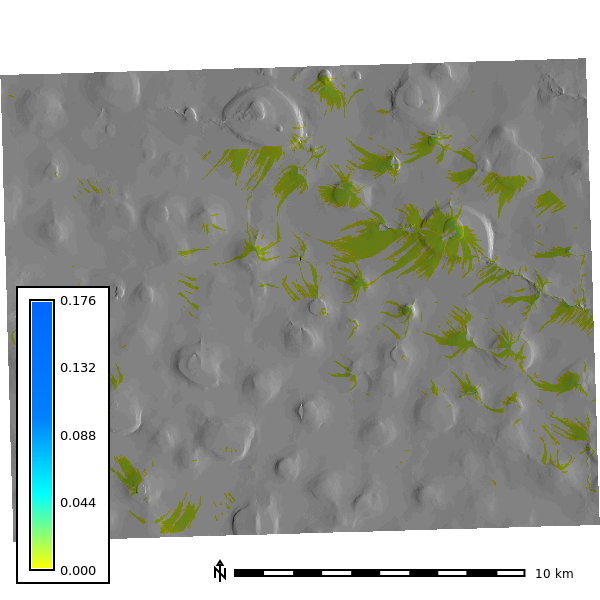
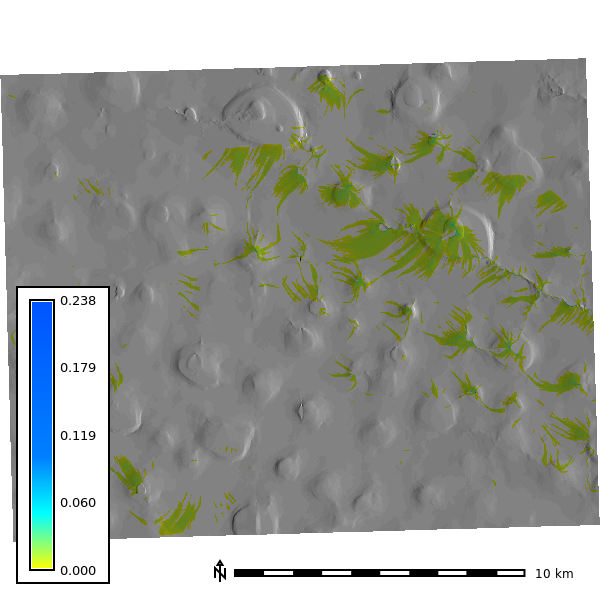
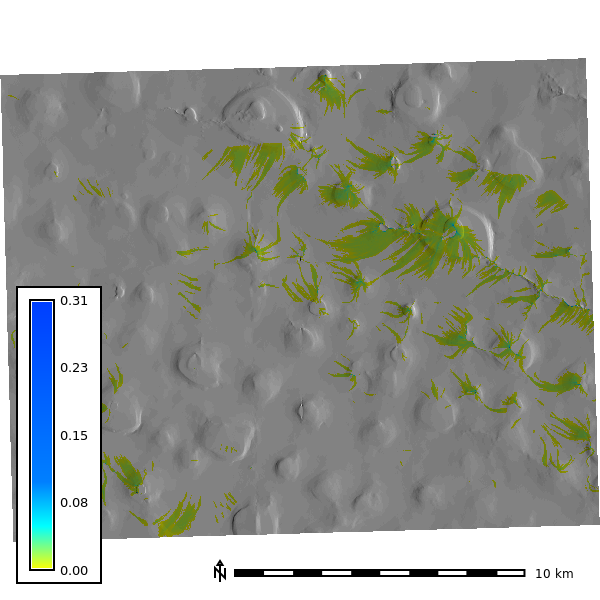
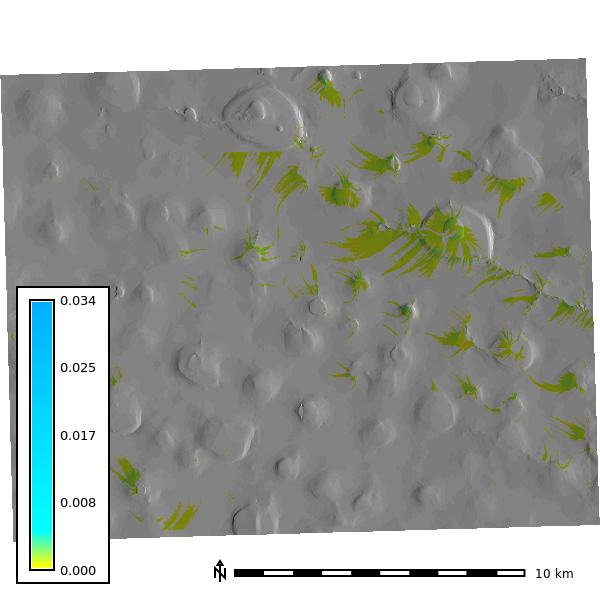
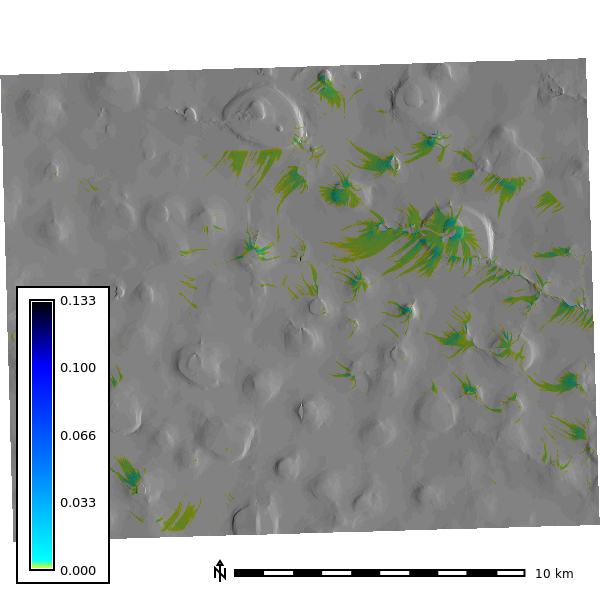
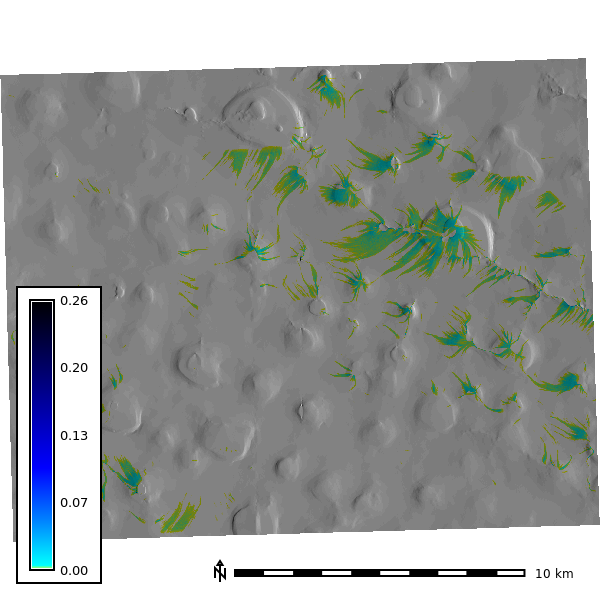
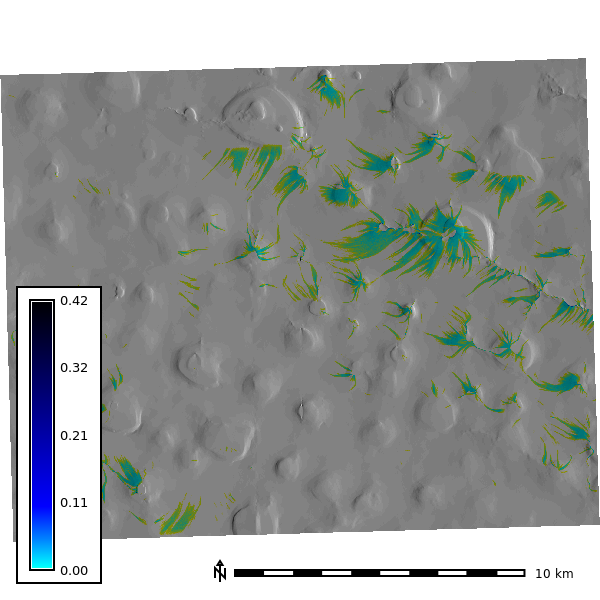
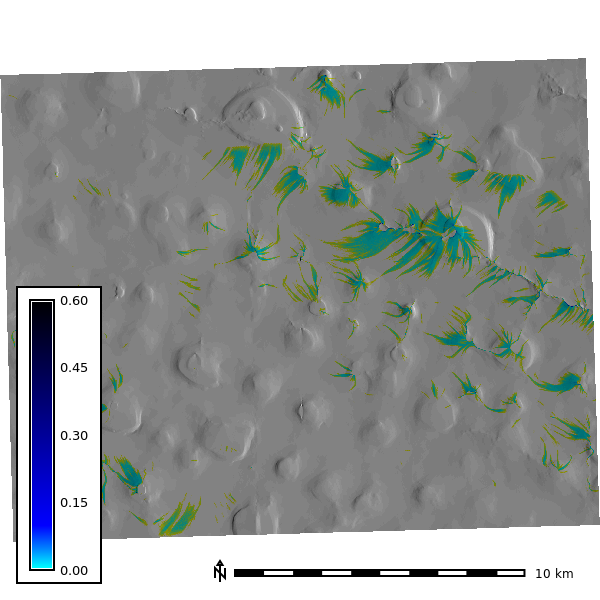
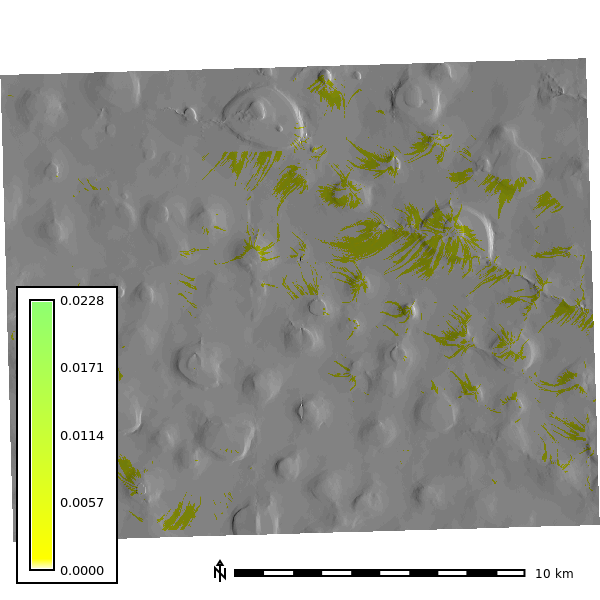
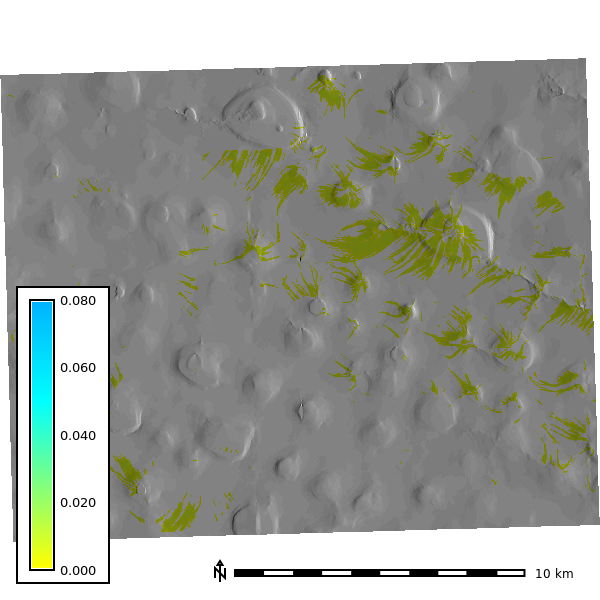
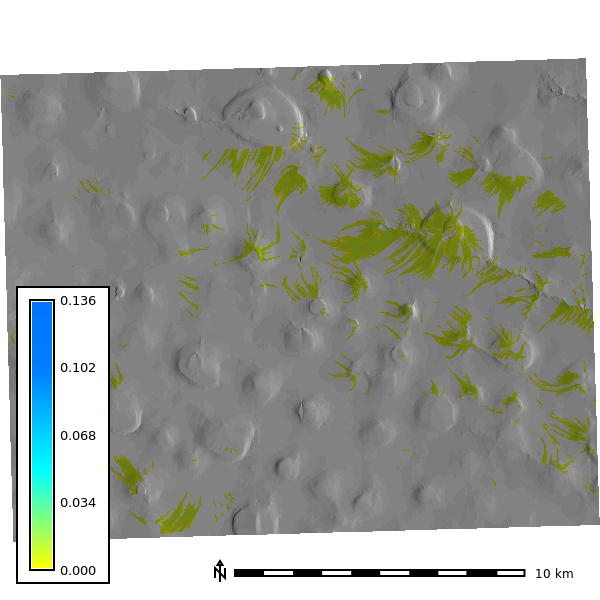
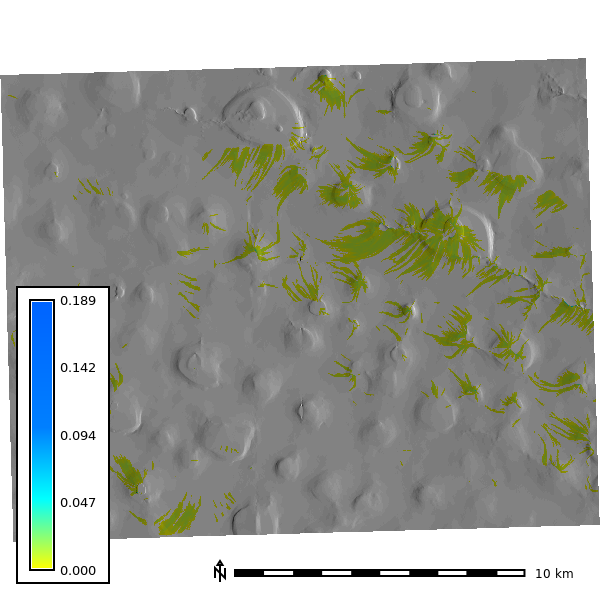
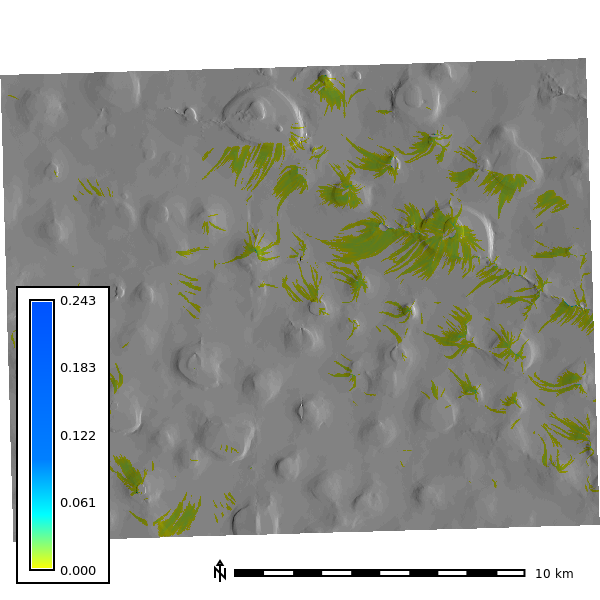
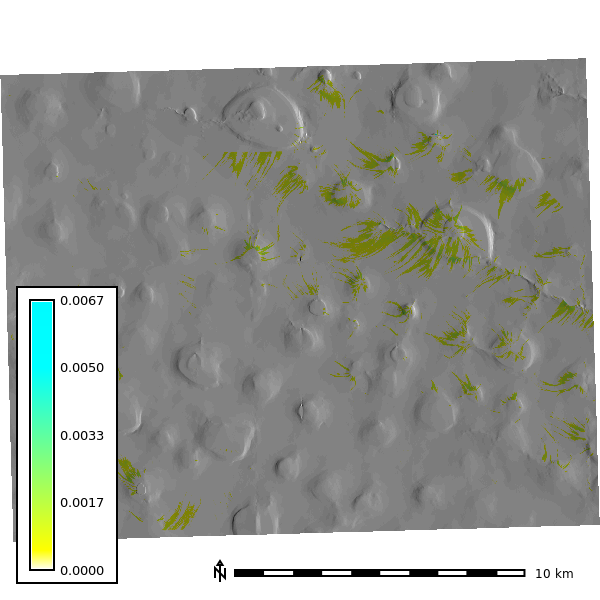
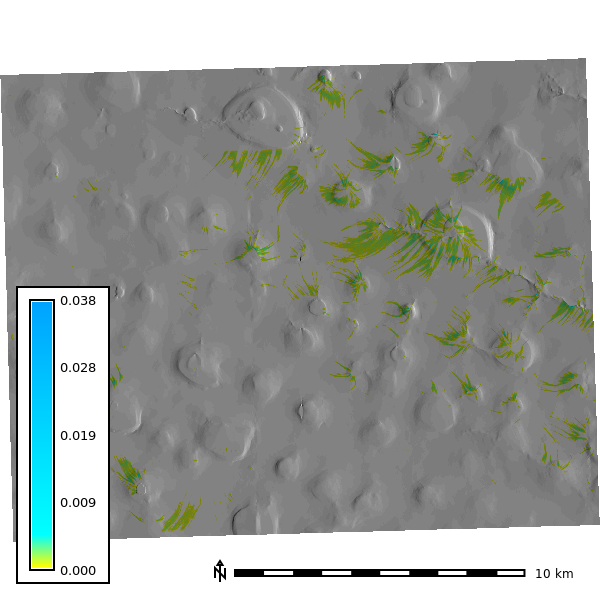
These runs replace the uniform rainfall input with stream-fed sources derived from flow accumulation, using 500,000 walkers and a 4-minute output step (scripts/groundwater.py). Three scenarios are simulated: groundwater seepage in streams during a 10 mm/hr rainfall, seepage with no rainfall, and springs at first-order streams only. These runs end at 19 minutes. Depth is in meters, discharge in m3/s.
Depth - Groundwater seepage in streams during rainfall
| 4 Min | 8 Min | 12 Min | 16 Min | 19 Min |
|---|---|---|---|---|
 |
 |
 |
 |
 |
Discharge - Groundwater seepage in streams during rainfall
| 4 Min | 8 Min | 12 Min | 16 Min | 19 Min |
|---|---|---|---|---|
 |
 |
 |
 |
 |
Depth - Groundwater seepage in streams, no rainfall
| 4 Min | 8 Min | 12 Min | 16 Min | 19 Min |
|---|---|---|---|---|
 |
 |
 |
 |
 |
Discharge - Groundwater seepage in streams, no rainfall
| 4 Min | 8 Min | 12 Min | 16 Min | 19 Min |
|---|---|---|---|---|
 |
 |
 |
 |
 |
Depth - Springs
| 4 Min | 8 Min | 12 Min | 16 Min | 19 Min |
|---|---|---|---|---|
 |
 |
 |
 |
 |
Discharge - Springs
| 4 Min | 8 Min | 12 Min | 16 Min | 19 Min |
|---|---|---|---|---|
 |
 |
 |
 |
 |
Sensitivity Analysis
The sensitivity analysis re-runs the simulation across DEM resolutions of 1, 3, 10, and 30 m and walker densities of 0.25 to 2 walkers per cell, with 10 random seeds per combination and 120 one-minute iterations (scripts/sensitivity.py). The watershed extent is delineated at each resolution with a 30,000-cell accumulation threshold.
Basin extent by resolution
Seed-averaged depth by resolution
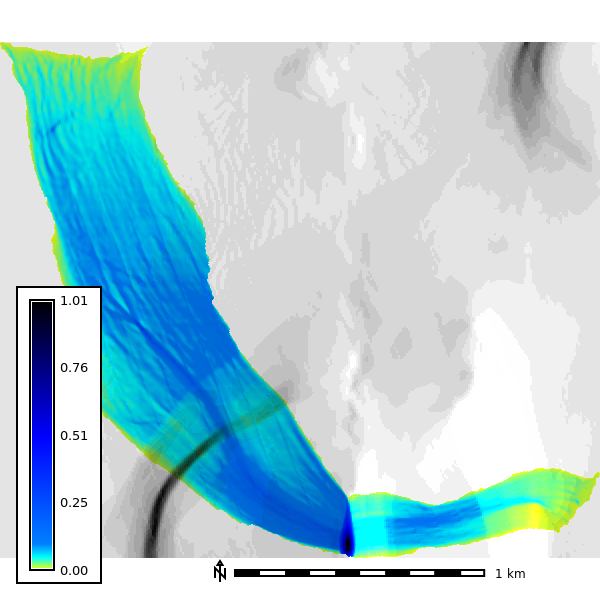
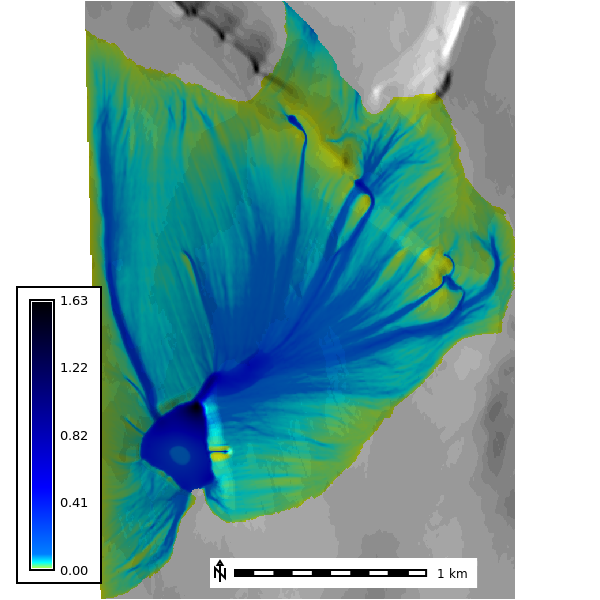
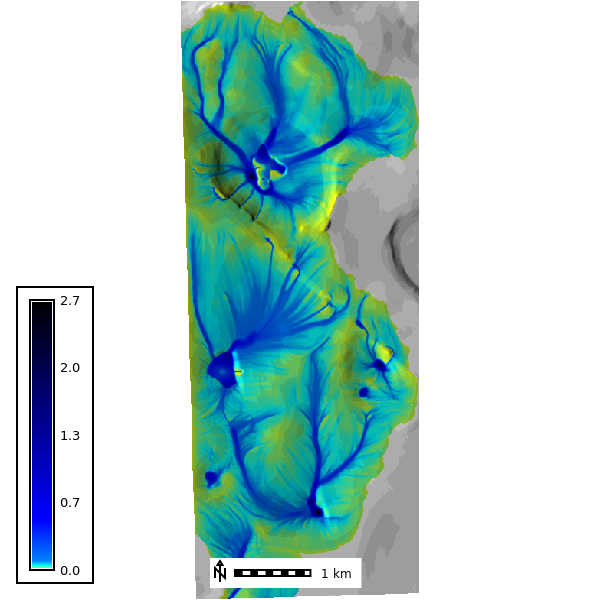
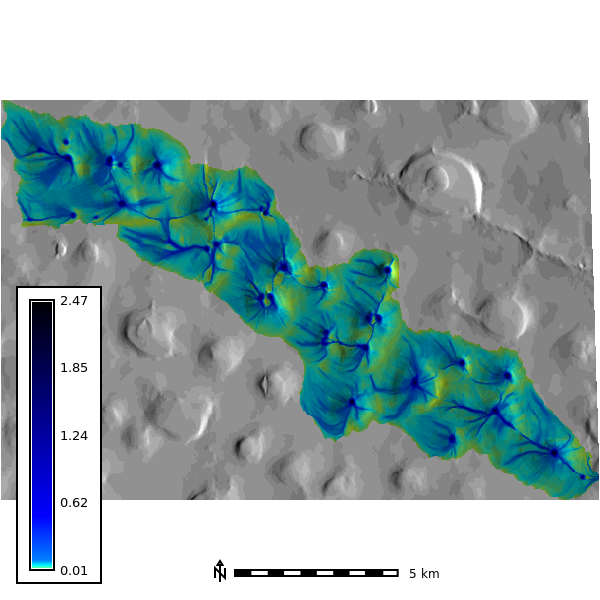
Mean water depth across the 10 seeds at the final output step of each run (walker density 2). The coarser grids end a few steps early: 117 at 10 m and 118 at 30 m.
| 1 m | 3 m | 10 m | 30 m |
|---|---|---|---|
 |
 |
 |
 |